
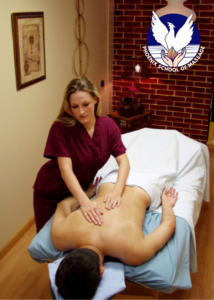
Phoenix School of Massage offers a comprehensive 500-hour Massage Therapy Program in Houston designed to prepare students for Texas massage therapy licensure and professional practice. The program combines hands-on massage training with anatomy, physiology, kinesiology, pathology, professional ethics, business education, specialized bodywork, and supervised clinical experience.
Our hybrid format combines on-campus hands-on instruction with interactive online coursework. Day and evening class options help students balance massage therapy training with work, family, and other responsibilities.
Students also learn approaches developed and taught at Phoenix School of Massage, including Holistic Massage™ and Massage Body Mechanics™, while building the practical skills needed to work with clients safely and professionally.
Program at a GlanceProgram: 500-Hour Massage Therapy Program Location: Houston, Texas Format: Hybrid, online coursework + on-campus hands-on training Schedule: Day and evening classes Program Length: Approximately 5.5 months Hands-On Experience: 50-hour supervised internship Training Includes: Swedish Massage, Sports Massage, Shiatsu, Pregnancy Massage, Sports Acupressure, Holistic Massage™ and Massage Body Mechanics™ Career Path: Designed to prepare students for the Texas massage therapist licensure pathway School: Phoenix School of Massage, Texas School License MS0008 |
Schedule a School Tour
Why Choose Phoenix School of Massage?
Choosing a massage school involves more than comparing tuition or schedules. Students should consider the depth of the curriculum, hands-on training, instructor experience, specialized techniques, clinical practice, licensing preparation, and the learning environment.
Phoenix School of Massage provides:
- A complete 500-hour massage therapy curriculum
- Hybrid instruction combining on-campus and interactive online learning
- Day and evening class options
- 50 hours of supervised internship experience
- Training in Swedish massage and multiple bodywork approaches
- Holistic Massage™ instruction
- Massage Body Mechanics™ instruction
- Anatomy, physiology, kinesiology, pathology, business, and ethics
- Preparation for the path toward Texas massage therapist licensure
- Training from instructors with experience in massage therapy education and professional practice
Phoenix School of Massage, Texas School License MS0008, is the longest-running massage school still operating in Texas, based on the sequential licensing records maintained by the Texas Department of Licensing and Regulation.
A Complete 500-Hour Massage Therapy Curriculum
The program is organized into 255 hours of core curriculum, 195 hours of expanded massage therapy education, and a 50-hour internship.
Core Program: 255 Hours
Swedish Massage Therapy: 125 Hours
Students develop foundational massage skills, including massage strokes, sequencing, client positioning, draping, communication, and hands-on application.
Human Anatomy: 50 Hours
Study of body structures relevant to massage therapy practice.
Human Physiology: 25 Hours
Study of the functions and systems of the human body.
Hydrotherapy: 20 Hours
Introduction to the therapeutic use of water and temperature applications within massage practice.
Business Practices and Professional Ethics: 15 Hours
Professional conduct, ethics, communication, business practices, and responsibilities of the massage therapist.
Human Health and Hygiene: 20 Hours
Health, sanitation, hygiene, safety, and practices that support a professional massage environment.
Expansion Program: 195 Hours
Students continue developing their skills through additional massage modalities and supporting coursework.
Massage Therapy Modalities: 75 Hours
- Bodywork Methods and Holistic Principles: 8 hours
- Sports Acupressure: 18 hours
- Shiatsu: 12 hours
- Swedish Massage for Pregnancy: 12 hours
- Sports Massage Technique: 19 hours
- Curriculum Integration for Massage Therapy: 6 hours
Supporting Coursework
- Kinesiology: 50 hours
- Business and Ethics: 30 hours
- Clinical Pathology: 40 hours
Internship: 50 Hours
Students complete 50 hours of supervised internship experience, providing an opportunity to apply classroom knowledge and hands-on skills in a professional setting.
Phoenix School of Massage, Texas School License MS0008, is the longest-running massage school still operating in Texas, based on Texas Department of Licensing and Regulation licensing records.
View the supporting Evidence Packet
The Evidence Packet documents the licensing records used to support this distinction and provides references to the underlying public TDLR records.
Learn More Than One Approach to Massage
Massage therapy is not limited to learning a single routine. Students are introduced to different approaches so they can better understand how massage techniques may be adapted according to the client, setting, and professional objective.
The curriculum includes Swedish massage as its foundation while introducing Sports Acupressure, Shiatsu, Pregnancy Massage, Sports Massage, holistic principles, and integrated bodywork concepts.
Holistic Massage™
Holistic Massage™ was developed at Phoenix School of Massage as an assessment-based approach to thinking about the individual client and developing a massage plan based on the person’s needs and characteristics.
Students learn that effective massage involves more than memorizing a sequence of strokes. Assessment, communication, technique selection, pressure, rhythm, positioning, and professional judgment all contribute to the massage experience.
Read the Phoenix School of Massage article: What Is Holistic Massage?
Massage Body Mechanics™
Massage therapy is physically demanding. Learning how to use the body efficiently is therefore an important part of preparing for professional practice.
Phoenix School of Massage developed Massage Body Mechanics™, which emphasizes using posture, positioning, leverage, movement, and the stronger lower body to help reduce unnecessary strain while performing massage.
The concepts developed through this work were later incorporated into massage therapy educational materials and professional instruction.
Read William Barry’s Massage Body Mechanics™ article: How to Massage All Day and Remain Stress Free
Compare the Training Before You Choose a Massage School
Before choosing a massage therapy program, consider what you will actually learn and how you will learn it.
Questions prospective students may want to ask include:
- Does the program provide the full education required for Texas licensure?
- How much hands-on practice is included?
- Is there supervised internship experience?
- Are anatomy, physiology, kinesiology, and pathology integrated with massage technique?
- Does the curriculum introduce more than one massage approach?
- Are students taught safe and efficient body mechanics?
- Are day and evening options available?
- How is online learning combined with hands-on instruction?
- Does the school help students understand the licensing process after graduation?
A school tour gives prospective students an opportunity to compare the training environment, meet staff, ask questions, and better understand how the program works before making an enrollment decision.
See How the Hybrid Massage Therapy Program Can Fit Your Life
The Phoenix School of Massage hybrid format combines on-campus hands-on training with live, interactive online coursework.
Hands-on techniques are taught and practiced in person. Appropriate academic subjects can be delivered interactively online, allowing students to complete portions of the program without traveling to campus for every class meeting.
Students may choose day or evening classes, depending on the available class schedule.
For working adults, parents, veterans, and career changers, this structure can make professional massage therapy education easier to integrate with existing responsibilities while preserving the hands-on training required for massage practice.
Hands-On Training and Supervised Internship
Massage therapy must ultimately be learned through practice.
Students develop technique through instructor-led demonstrations, supervised practice, correction, repetition, and application. The curriculum progresses from foundational Swedish massage to additional techniques and integrated bodywork concepts.
The 50-hour internship gives students an opportunity to work with clients under supervision and begin bringing together massage technique, communication, intake procedures, professionalism, body mechanics, time management, and client care.
Understand the Path From School to Texas Licensure
Texas requires massage therapist applicants to document at least 500 hours of massage therapy coursework from a Texas-licensed massage school.
Phoenix School of Massage’s 500-hour program is structured around that educational requirement.
Students and prospective students can review the state’s requirements directly through the Texas Department of Licensing and Regulation Massage Therapy Examination Requirements.
Graduating from massage school is an important part of the process, but it is not the same as receiving a massage therapist license. Students must also complete the applicable examination and licensing requirements established by TDLR.
Preparing for the Massage Therapy Examination
Texas recognizes examination pathways established by TDLR.
Students who use the MBLEx route must also satisfy Texas-specific requirements, including the Texas Jurisprudence Examination, as applicable under current TDLR rules.
Because licensing requirements can change, students should always review the current information published by TDLR when preparing to apply.
Schedule a School Tour to learn how the 500-hour program progresses from classroom training and hands-on practice to graduation and the licensing process.
Massage Therapist Career Outlook
Massage therapists work in a variety of environments, including:
- Massage therapy practices
- Spas and wellness centers
- Chiropractic offices
- Health and wellness practices
- Fitness and sports settings
- Resorts and hospitality environments
- Private practice
- Mobile or on-site massage services
The U.S. Bureau of Labor Statistics Occupational Outlook Handbook for Massage Therapists provides independent federal information about the profession, including employment projections, wages, work settings, and occupational characteristics.
BLS projects employment of massage therapists to grow 15 percent from 2024 through 2034, with approximately 24,700 openings per year on average during that period.
Career opportunities and earnings vary according to experience, work setting, geographic location, schedule, clientele, and whether the therapist is employed or self-employed.
Veterans and VA Education Benefits
Phoenix School of Massage welcomes veterans, service members, and eligible family members exploring massage therapy as a professional career.
Eligible students may be able to use VA education benefits toward approved education and training. Because eligibility and benefit amounts are determined by the U.S. Department of Veterans Affairs, prospective students should review their individual benefit status directly with VA.
Learn about GI Bill® and other VA education benefits through the U.S. Department of Veterans Affairs
Phoenix staff can assist prospective veteran students with school-related information and documentation as they explore their educational options.
Serving Houston and Surrounding Communities
Phoenix School of Massage is located in Houston and serves students from throughout the Greater Houston area, including Houston, Pearland, Sugar Land, Pasadena, Missouri City, Katy, Cypress, Spring, The Woodlands, and surrounding communities.
The hybrid schedule can reduce the number of weekly trips to campus while maintaining the in-person instruction necessary for developing hands-on massage skills.
Is Phoenix School of Massage the Right Fit for You?
The program may be appropriate for students who want:
- A career centered on hands-on professional skills
- A combination of massage technique and academic education
- Exposure to both traditional and holistic approaches
- Hybrid learning
- Day or evening class options
- Supervised client experience
- Preparation for the Texas massage therapist licensing pathway
- Training in body mechanics designed with therapist longevity in mind
The most useful way to evaluate the program is to see the school, understand the schedule, review the curriculum, and ask questions about the training.
Schedule a School Tour – (713)-974-5976
Frequently Asked Questions
How many hours are required to become a massage therapist in Texas?
Texas requires applicants to document at least 500 hours of qualifying massage therapy education. Students should review current requirements directly with TDLR.
Is the Phoenix Massage Therapy Program 500 hours?
Yes. The program consists of 255 core hours, 195 expansion hours, and a 50-hour internship, for a total of 500 hours.
Is the Massage Therapy Program hybrid?
Yes. The program combines on-campus hands-on instruction with interactive online coursework. Massage techniques and other hands-on components are taught in person.
Are day and evening classes available?
Phoenix School of Massage offers day and evening class options according to the current academic schedule.
What massage techniques will I learn?
Students begin with Swedish massage and are also introduced to Sports Acupressure, Shiatsu, Pregnancy Massage, Sports Massage, Holistic Massage™, Massage Body Mechanics™, and related bodywork concepts.
Does graduation automatically make me a Licensed Massage Therapist?
No. Completion of the school program fulfills the educational portion of the pathway. Graduates must also satisfy the examination, application, and other licensing requirements established by TDLR.
Your Next Step: Schedule a School Tour
Choosing a massage school is an educational and career decision. A school tour allows you to see the learning environment, discuss the hybrid schedule, review the curriculum, and ask questions about the path from enrollment through internship and Texas licensure.
Schedule a School Tour – (713)-974-5976
Phoenix School of Massage
Texas School License MS0008
Houston, Texas
Program information reviewed by William Barry, Director, Phoenix School of Massage.